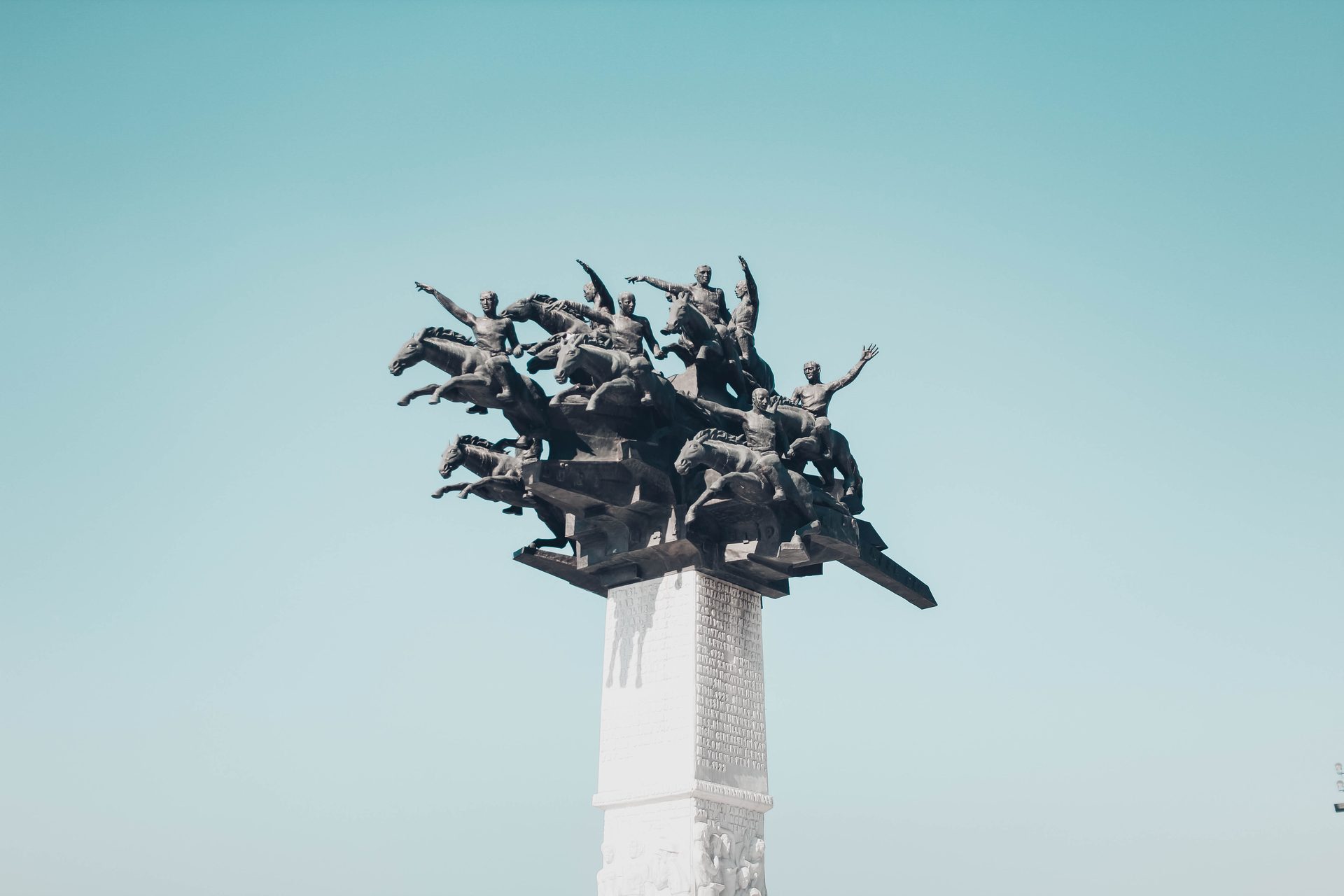
Did you notice the sculpture on the homepage? It rotates when you drag it. That piece began as a photograph — this is the story of how a frame becomes a tangible work.
Why 3D?
Photography is the art of compressing a three-dimensional world into two dimensions. After years of trying to do that compression as well as possible, I asked the reverse question: can I unfold it back? Can the form I froze in a frame become an object you can walk around? For me 3D isn't a separate discipline but a continuation of the same curiosity: understanding the image as deeply as possible.
The process: from frame to mesh
It starts with a photograph: a strong form, readable texture, a clean silhouette. Then the frame gains volume — sometimes manually, sometimes with AI-assisted tools: depth maps, meshing, retopology. That's where the technical part ends and the real work begins: sculpting. Correcting the form by hand in digital space, working the surface while thinking about how light will travel across it.
Photography flattens the world; 3D unfolds it back.
Light: the photographer's advantage
In 3D, light is entirely under your control — and a photography background is a huge advantage here. Building light in a scene, I make the same decisions as on set: where's the key, how much fill, what does the rim light add to the form? The dramatic feel of the Federal, Skull and Specter series comes directly from set lighting.
The result: a touchable image
The finished piece is neither photograph nor sculpture — something in between. The viewer rotates it, leans in, watches light travel across the surface. Where a photograph says "look", 3D says "explore". That's exactly why the sculpture is on the homepage: don't look at it — turn it.
Let's write this story together.
Send your date and the mood you imagine — I'll reply within 24 hours.
Get in Touch