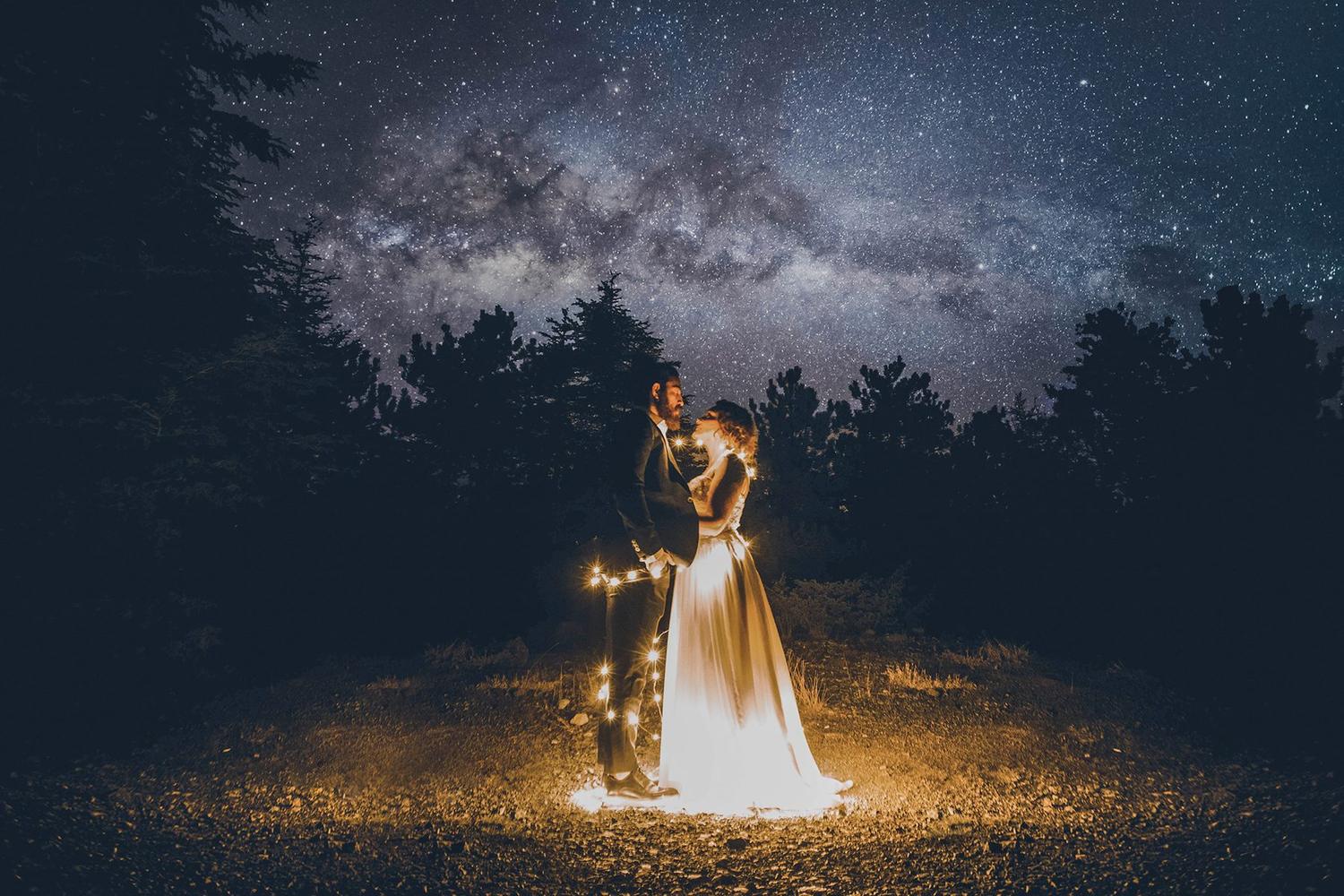
When does a wedding photograph stop being a "nice photo" and become a film still? The answer isn't in the equipment — it's in the eye.
I come from directing. The questions I ask when building a scene are the same at a wedding: Where is the light coming from? What belongs in the frame, and what doesn't? What happens before and after this moment? Cinematic wedding photography means asking these three questions at every moment of the day.
Light: dramatic but honest
Cinematic usually brings to mind low-lit, contrasty images. True — but the trick isn't faking light, it's reading existing light dramatically. Side light through a window, the stage spot during the first dance, a single street lamp on a night portrait... That feeling from films usually comes from one directional light source.
Composition: intent in the frame
A film still doesn't tolerate accident. Foreground-background relationships, negative space, symmetry or deliberate asymmetry — each carries intent. The way to do this at a wedding is reading the venue in advance: before every wedding I walk the location asking "where does the film happen here?" The ceremony area is often not the most cinematic spot; a corridor, a staircase, a doorway gives stronger scenes.
Colour: grading is the story's voice
When the shoot ends, the work is half done. The signature of the cinematic feel is written in colour grading — the same craft as in cinema. Cooling the shadows while protecting skin tones, warming the highlights slightly, keeping contrast soft like film negative... I don't stamp the same preset on every wedding; each story gets its own palette, shaped by the day's light and the venue's character.
What's cinematic is the eye, not the equipment. The camera is just the instrument.
If you want your wedding to become a film, start with this question: "What kind of film is ours?" An intimate indie, a grand drama, a joyful road movie? We'll build the rest together.
Let's write this story together.
Send your date and the mood you imagine — I'll reply within 24 hours.
Get in Touch